Product care
How to care for a leather bag so it lasts for decades
By Hurugo · · 5 min read
A well-made leather bag is one of the few things that genuinely looks better with age. With a little care, it develops a rich patina, softens to your shape, and lasts for decades. This guide covers what we recommend to Balvaro customers.
Know your leather
- Full-grain leather keeps the complete outer layer of the hide. It is the strongest and most durable grade, and it develops the deepest patina.
- Top-grain leather has the surface lightly sanded and finished for a more uniform look. It is durable but develops less character over time.
- Pull-up or waxed leathers are treated with oils and waxes that shift when the leather is bent or rubbed, creating lighter tones and a distinctive vintage look. Light scuffs can often be buffed away by hand.
Check your bag's product details or care card before using any product, and always test a cleaner or conditioner on a hidden area first.
Everyday care
- Wipe your bag with a soft, dry cloth every week or two to remove dust and grit.
- Empty it regularly. Overloading stretches the leather and strains handles, straps, and seams.
- Keep pens capped and cosmetics in a pouch to avoid stains on the lining and leather.
- Give it a rest between heavy-use days if you can, so the leather can recover its shape.
How to clean a leather bag
- Empty the bag and shake out debris. Use a soft brush or vacuum attachment on the lining and seams.
- Dust the outside with a dry, soft cloth.
- Wipe with a damp cloth. Use a cloth that is barely damp, not wet, and work in gentle circles.
- Use a leather cleaner for marks. Apply a small amount of a pH-balanced leather cleaner to the cloth, never directly to the leather, and test it on a hidden area first.
- Let it dry naturally at room temperature, away from direct sun and heat.
Condition it a few times a year
Leather is a natural material, and like skin it dries out over time. A good leather conditioner replaces lost oils and keeps it supple. For most bags, conditioning every three to six months is enough, or sooner if the leather starts to look dull, dry, or pale. Bags used in hot, dry, or sunny conditions need it more often.
- Clean the bag first, so you are not sealing dirt in.
- Test the conditioner on a hidden area and wait to see how it affects the colour. Most conditioners darken leather slightly at first.
- Apply a thin layer with a soft cloth in small circles. Less is more.
- Leave it to absorb, ideally overnight.
- Buff off any excess with a clean, dry cloth.
If your bag gets wet
Blot off surface water straight away with a soft cloth. Stuff the bag with plain, uncoloured paper to help it hold its shape and absorb moisture from inside, and let it dry slowly at room temperature. Never use a hairdryer, heater, or direct sun to speed things up, because fast drying can make leather stiff and cracked. Once it is fully dry, apply a light coat of conditioner.
Scratches, scuffs, and stains
- Light scratches on oiled or pull-up leathers often fade if you rub them firmly with a clean fingertip. The warmth redistributes the oils and wax in the leather.
- Deeper scuffs usually soften with a little conditioner worked into the area.
- Grease and oil stains should be blotted, not rubbed. Leave the mark to absorb into the leather over time, or ask a leather specialist for help.
- Ink and dye transfer is best left to a professional, because home remedies tend to spread the stain.
How to store a leather bag
- Stuff it with acid-free tissue or plain paper so it keeps its shape.
- Keep it in a breathable cotton dust bag. Never seal leather in plastic, which traps moisture and encourages mould.
- Store it somewhere cool, dry, and out of direct sunlight, which fades and dries leather.
- Store it standing upright on its base rather than hanging it by the handles for long periods.
- If you store a bag for months, take it out occasionally to air, and condition it before use.
Hardware, zips, and straps
Wipe metal hardware with a dry cloth and keep leather conditioner off it. If a zip becomes stiff, rub the teeth with a little beeswax or a graphite pencil. Check stitching and strap attachments now and then, and have small repairs done early, before they become big ones.
Embrace the patina
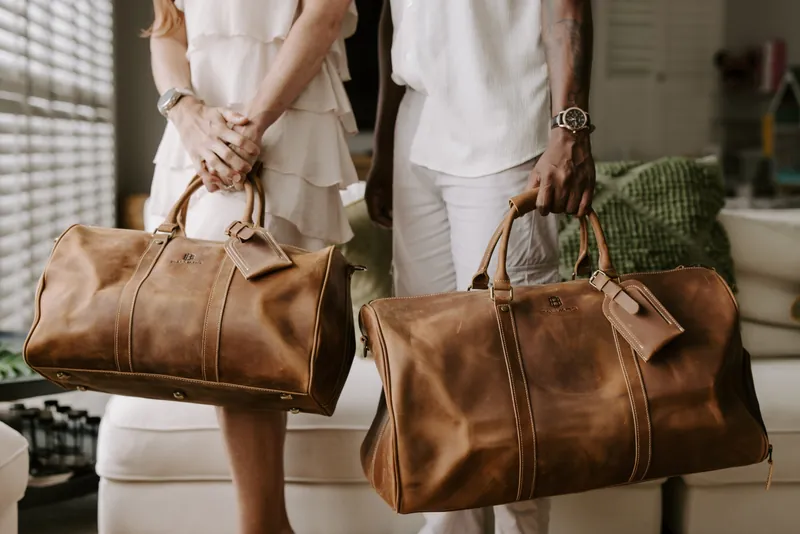
Over months and years, good leather darkens, softens, and picks up a sheen from handling, light, and natural oils. That patina is not wear and tear; it is the reason quality leather is worth owning. Each bag ages differently, and no two end up quite the same.
Balvaro leather bags
Balvaro makes leather laptop bags, backpacks, sling bags, travel bags, totes and handbags, and a vintage range, all designed to be carried every day and to look better the more they are used. Explore the range on the Balvaro brand page or shop at balvaro.co.za.
Frequently asked questions
How often should I condition a leather bag?
Every three to six months for most bags, or whenever the leather starts to look dry, dull, or pale. Bags used in hot, dry, or sunny conditions may need conditioning more often.
Can I use coconut oil or olive oil on leather?
It is best not to. Kitchen oils can darken leather unevenly, attract dirt, and turn rancid over time. A conditioner made for leather is a safer choice.
How do I get water marks out of a leather bag?
Lightly dampen the whole panel with a barely damp cloth, working from the centre outwards, so it dries evenly without a sharp edge. Let it dry naturally at room temperature, then apply a little conditioner.
What is leather patina?
Patina is the natural darkening, softening, and sheen that quality leather develops over time from handling, light, and oils. It is a sign of good leather, especially full-grain, and makes each bag unique.